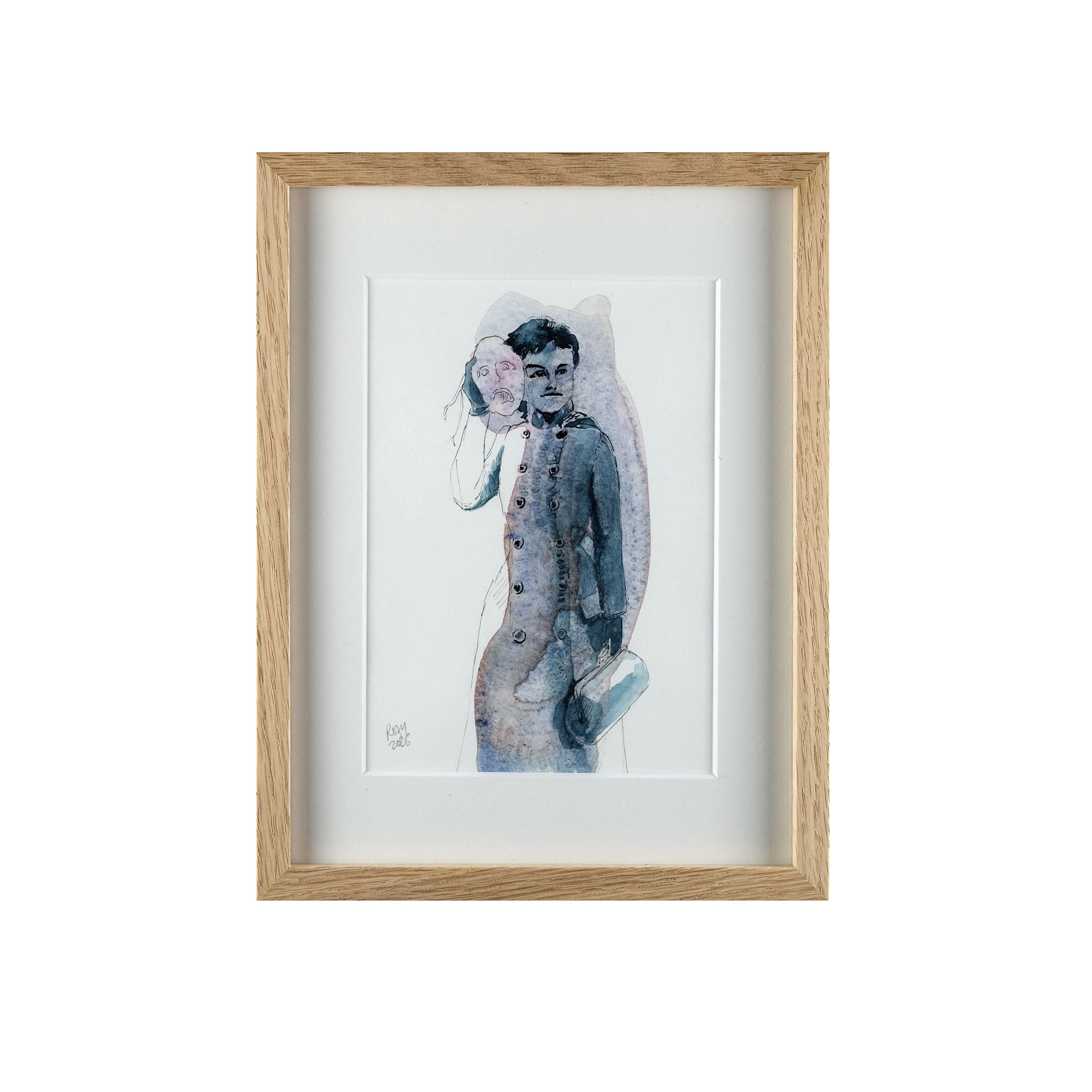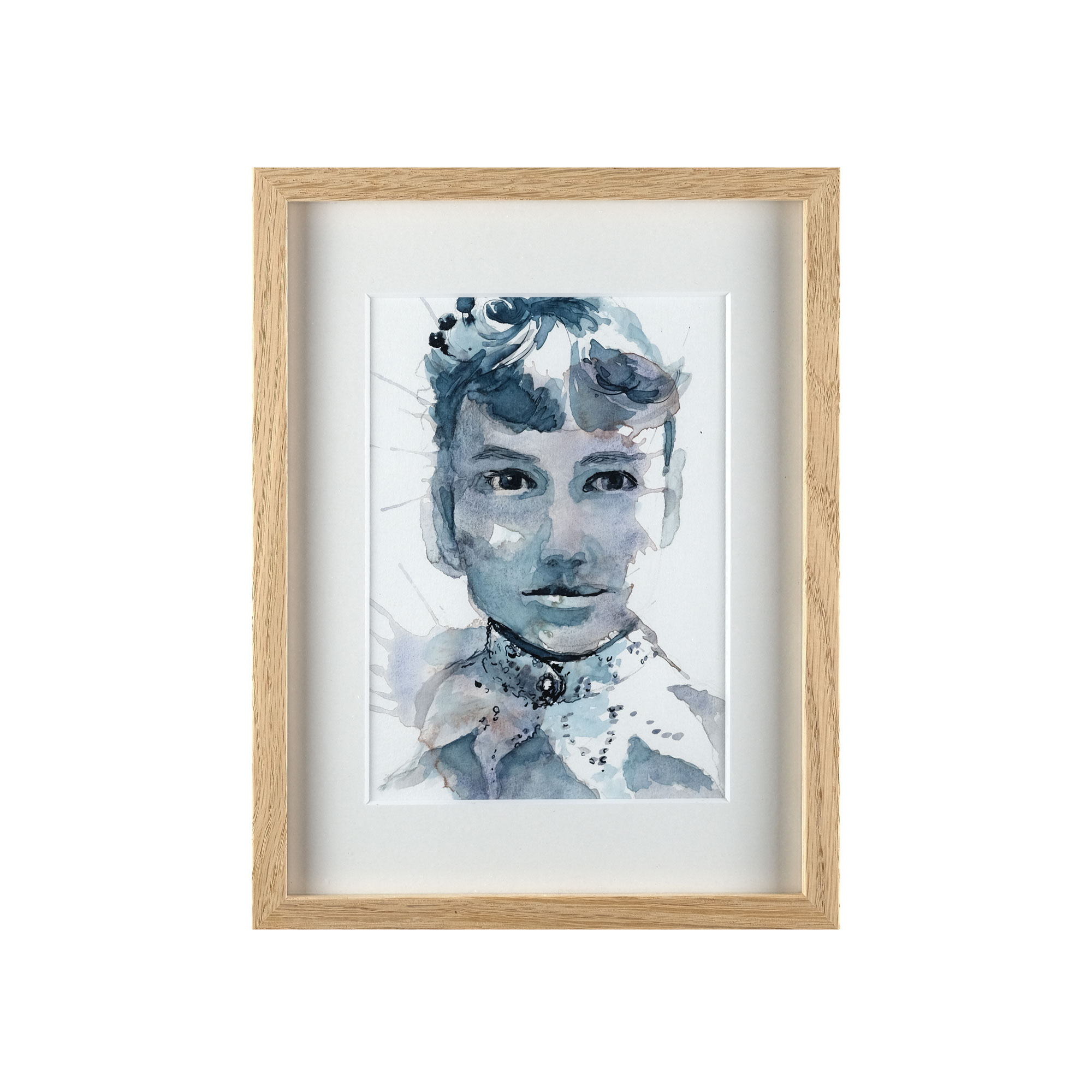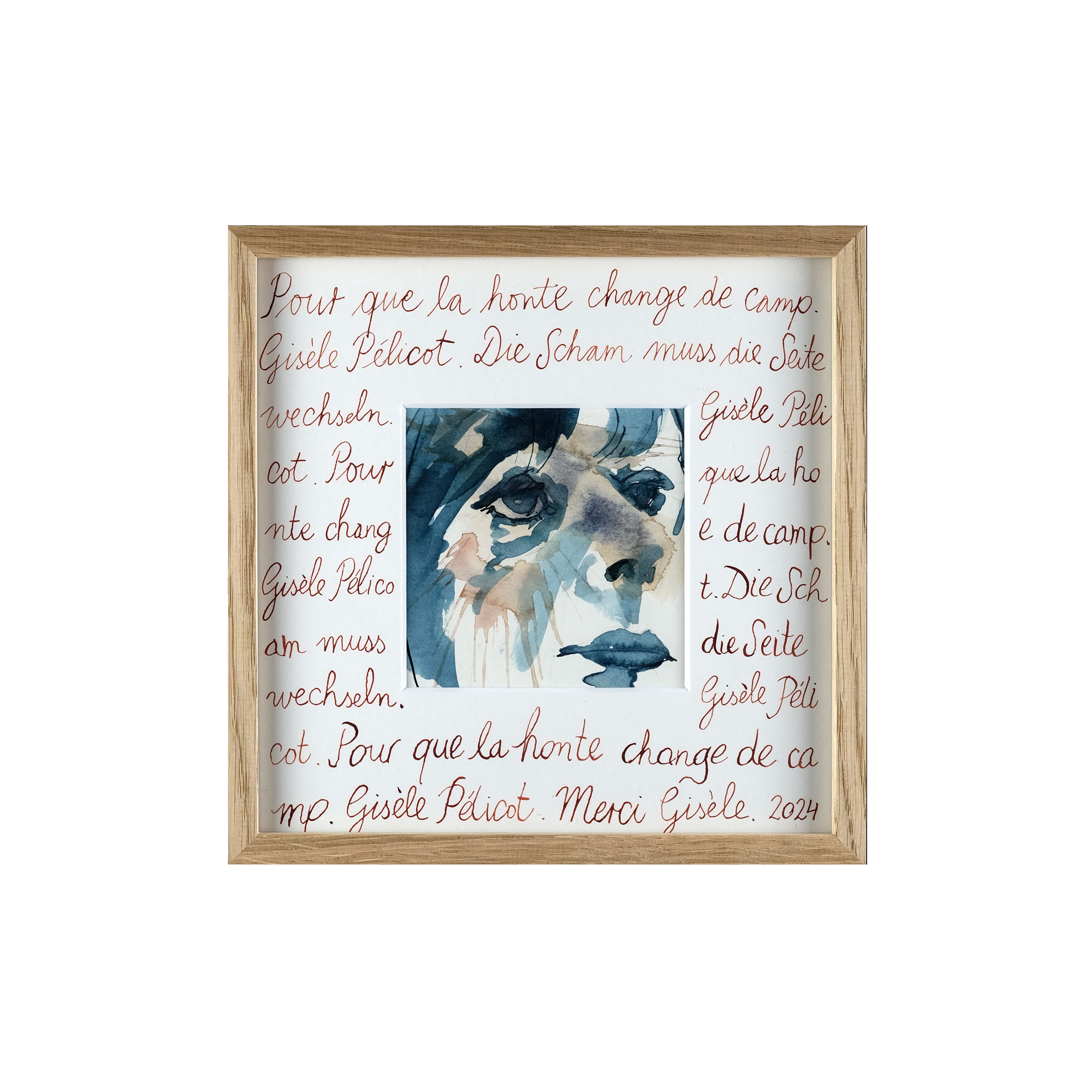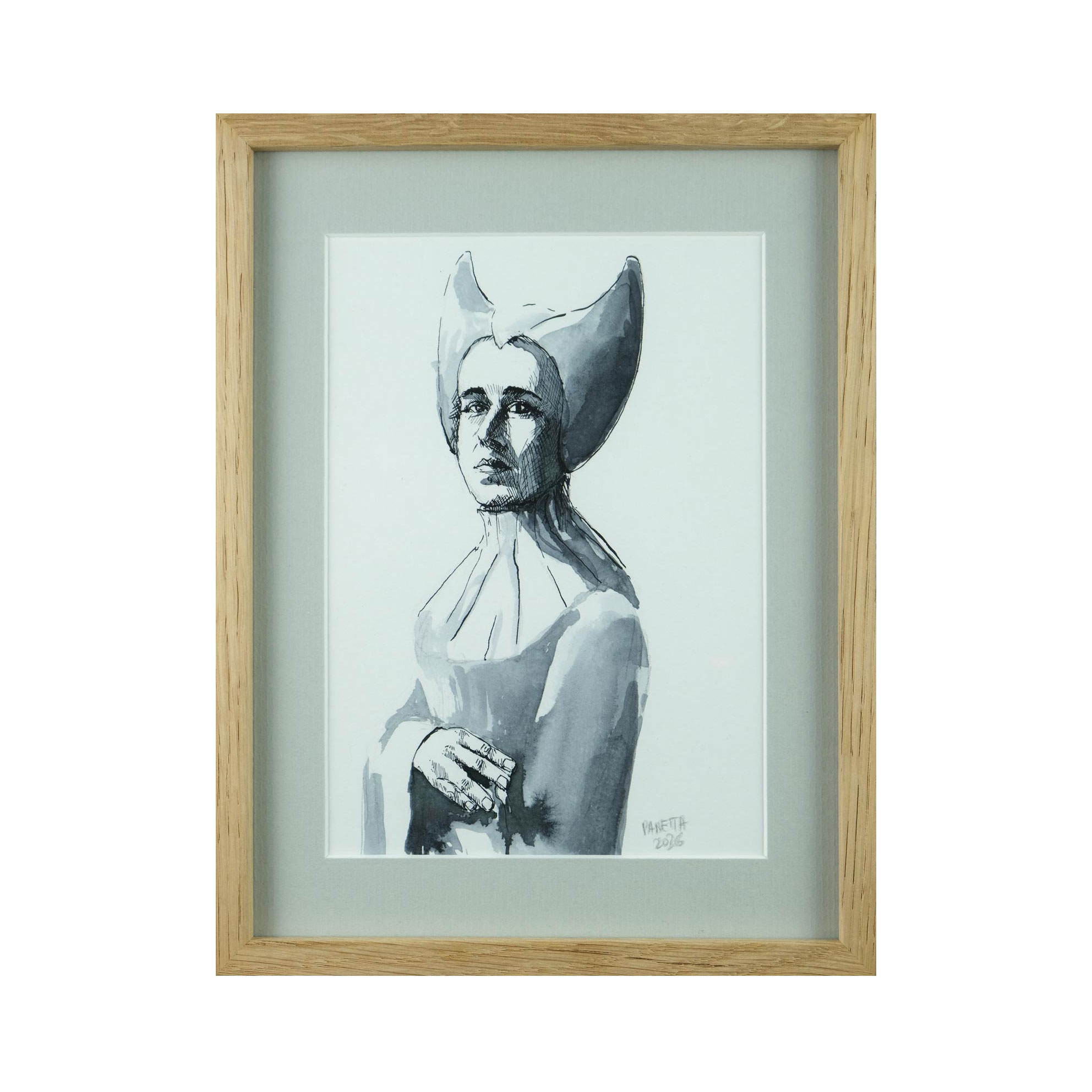
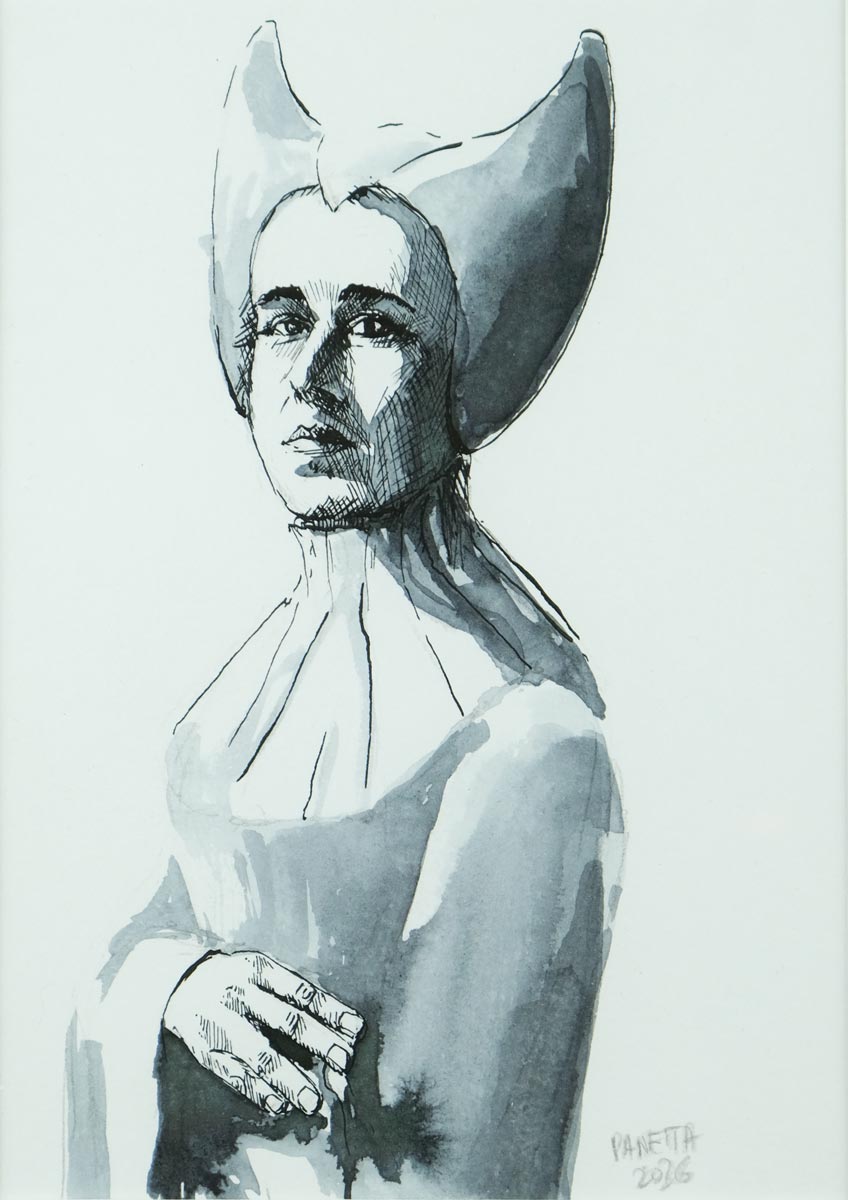
Christine de Pizan

Availability & Price


€170.00

Available, delivery time: Attention: Shipping after August 2, 2026!

Show all artwork by: Roxana Panetta
More about "Christine de Pizan"
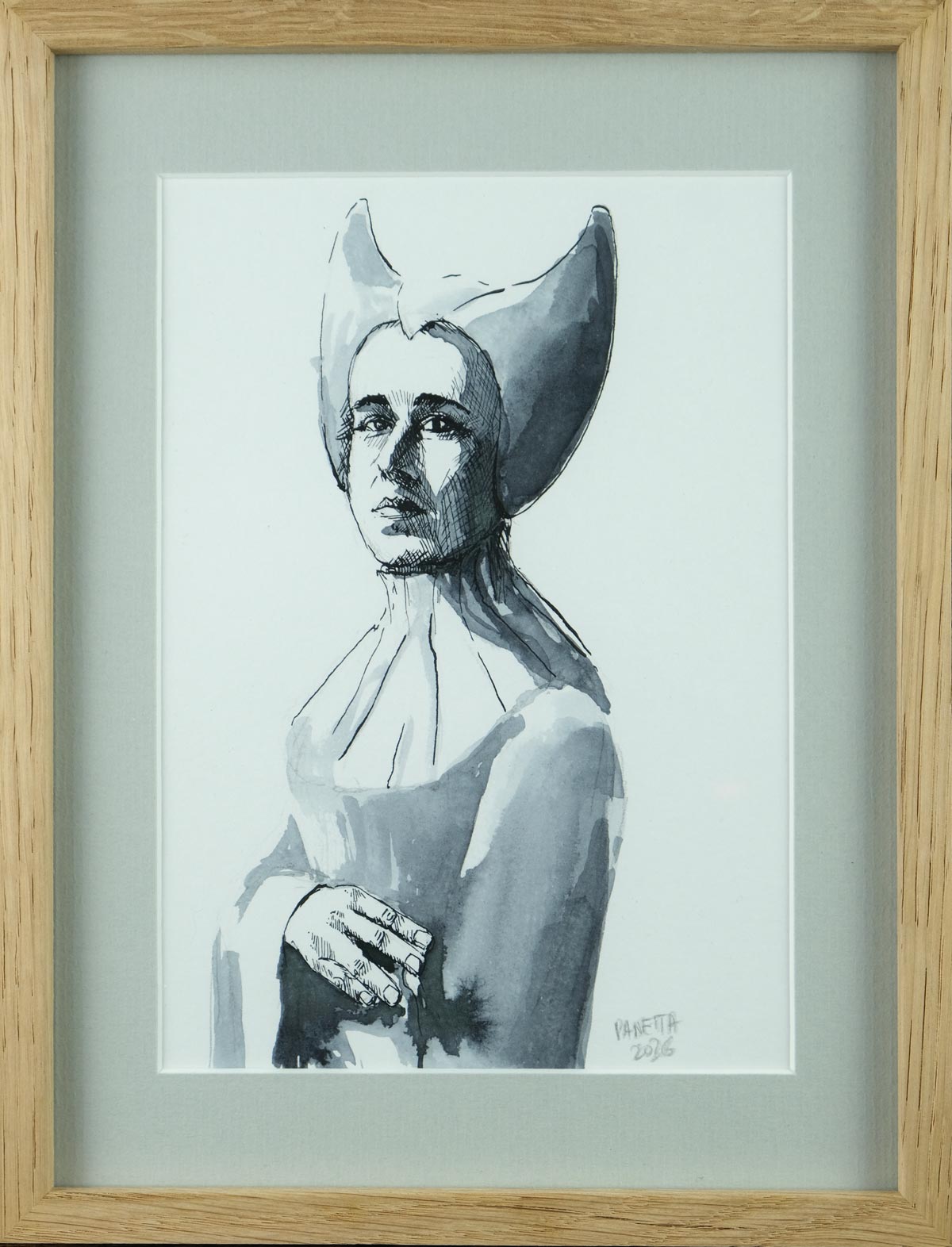
Ink drawing with wooden frame and passepartout (18x24cm)

About Christine de Pizan (Pisan) 
* ~1364 (Venice), † 1430 Poissy (France) 
 Christine de Pizan was an author of the late Middle Ages who was a strong advocate for women, but not only. Widowed at a young age with three children, she faced enormous challenges, which she tackled with courage. Educated by birth, she soon devoted herself to writing texts - first poems, then treatises, biographies and novels. “The City of Ladies” (1405) is her best-known work, which focuses on the achievements of women since antiquity and the (metaphorical) space in which they can thrive: their own city. 
 Christine de Pizan had many admirers and supporters of her works - including influential women and men at European courts. She wrote until the end of her life in 1430 and had her texts copied in a writing workshop. There were already numerous translations of her works during her lifetime. Her works continued to be read and copied for another ~150 years after her death.
Motive: Portrait
Technique & Materials: Ink drawing on paper

0 of 0 reviews

Leave a review!

Share your experiences with other customers.


More drawings in this style

Bobbi Gibb · First Female Marathon Runner
Bobbi Gibb (b. 1942) American Marathon Runner In 1966, Bobbi Gibb wanted to run the Boston Marathon. The rejection came promptly: women were "physiologically incapable" of running a marathon. Gibb hid in the bushes, jumped into the field of runners, and ran – at 3 hours 21 minutes, faster than two-thirds of the men. She simply did it. This ink drawing is based on a photograph from 1966 showing her after completing the run.

€250.00*
Christine celebrates Joan
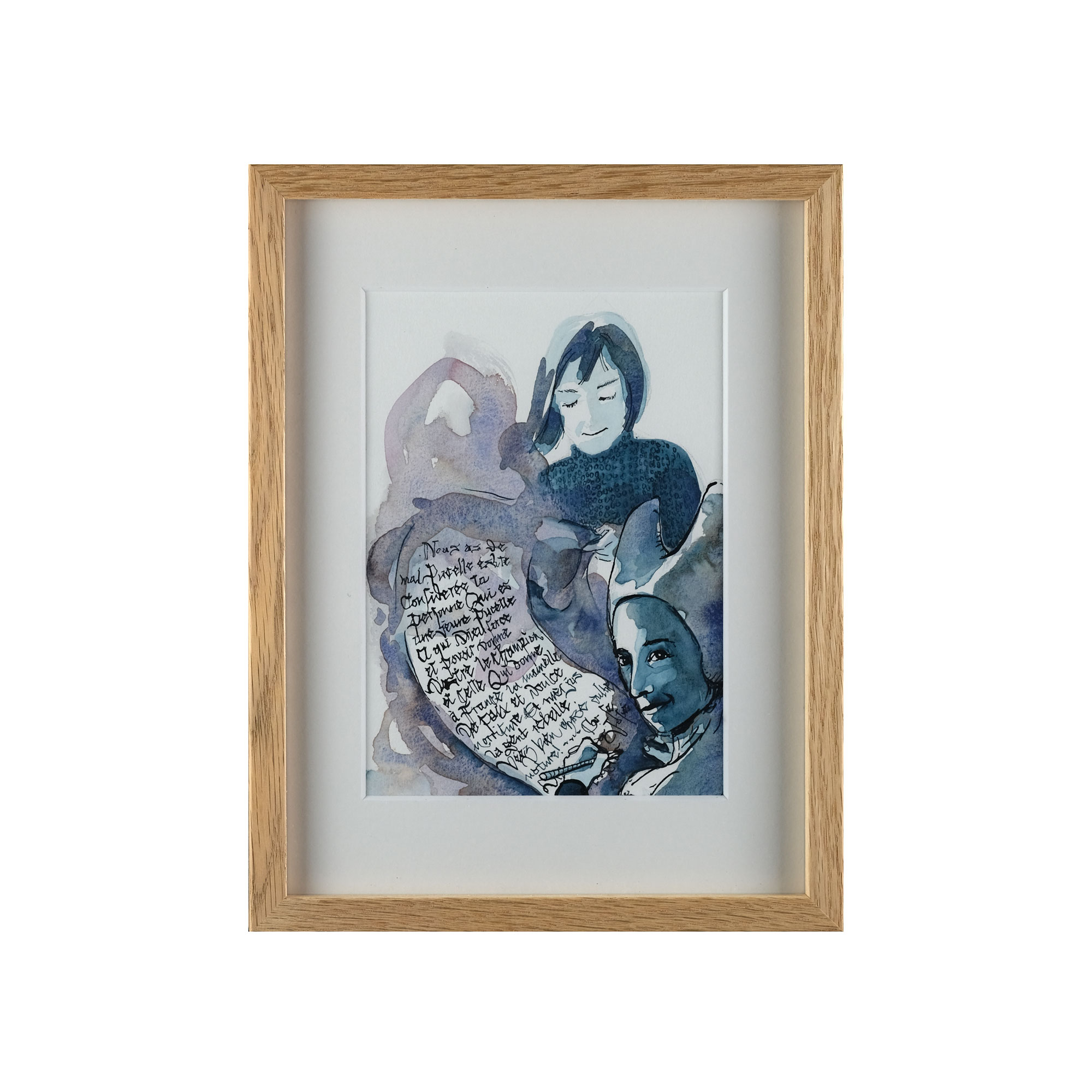
Christine de Pizan (c.1365–1430) was a medieval author read throughout Europe. In the final year of her life she composed an ode to Joan of Arc, the Maid of Orléans, whose significance she was the first to recognise. Christine is the only person to celebrate Joan's achievement whilst Joan was still alive. The ink drawing shows Christine de Pizan in her characteristic widow's dress (with the headdress known as a hennin), composing the ode to Joan.The text on the drawing is an extract from Christine de Pizan's original verses and reads: Nous as de mal, Pucelle eslite! Considerée ta personne, Qui es une jeune pucelle, A qui Dieu forceet povoir donne D’estre le champion et celle Qui donne à France la mamelle De paix et doulce norriture, Et ruer jus la gent rebelle, Véez bien chose oultre nature! ... Car se /Translated, this passage reads: "When we take your person into account, you who are a young maiden, to whom God gives the strength and power to be the champion who casts the rebels down and feeds France with the sweet, nourishing milk of peace, here indeed is something quite extraordinary!"

€250.00*
Christine de Pizan
Ink drawing with wooden frame and passepartout (18x24cm)About Christine de Pizan (Pisan) * ~1364 (Venice), † 1430 Poissy (France)  Christine de Pizan was an author of the late Middle Ages who was a strong advocate for women, but not only. Widowed at a young age with three children, she faced enormous challenges, which she tackled with courage. Educated by birth, she soon devoted herself to writing texts - first poems, then treatises, biographies and novels. “The City of Ladies” (1405) is her best-known work, which focuses on the achievements of women since antiquity and the (metaphorical) space in which they can thrive: their own city.  Christine de Pizan had many admirers and supporters of her works - including influential women and men at European courts. She wrote until the end of her life in 1430 and had her texts copied in a writing workshop. There were already numerous translations of her works during her lifetime. Her works continued to be read and copied for another ~150 years after her death.

€170.00*
Iconic (Gisèle Pelicot)
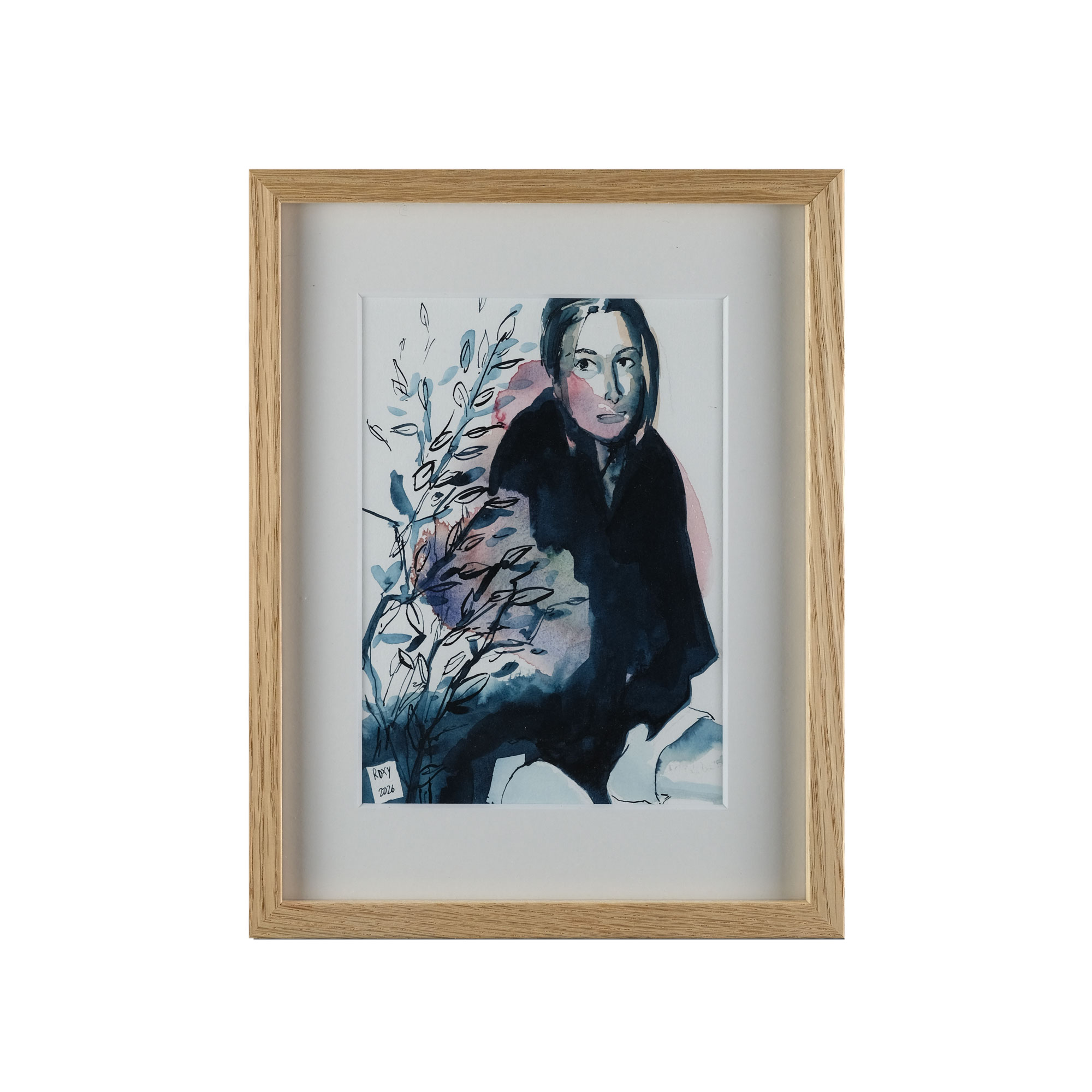
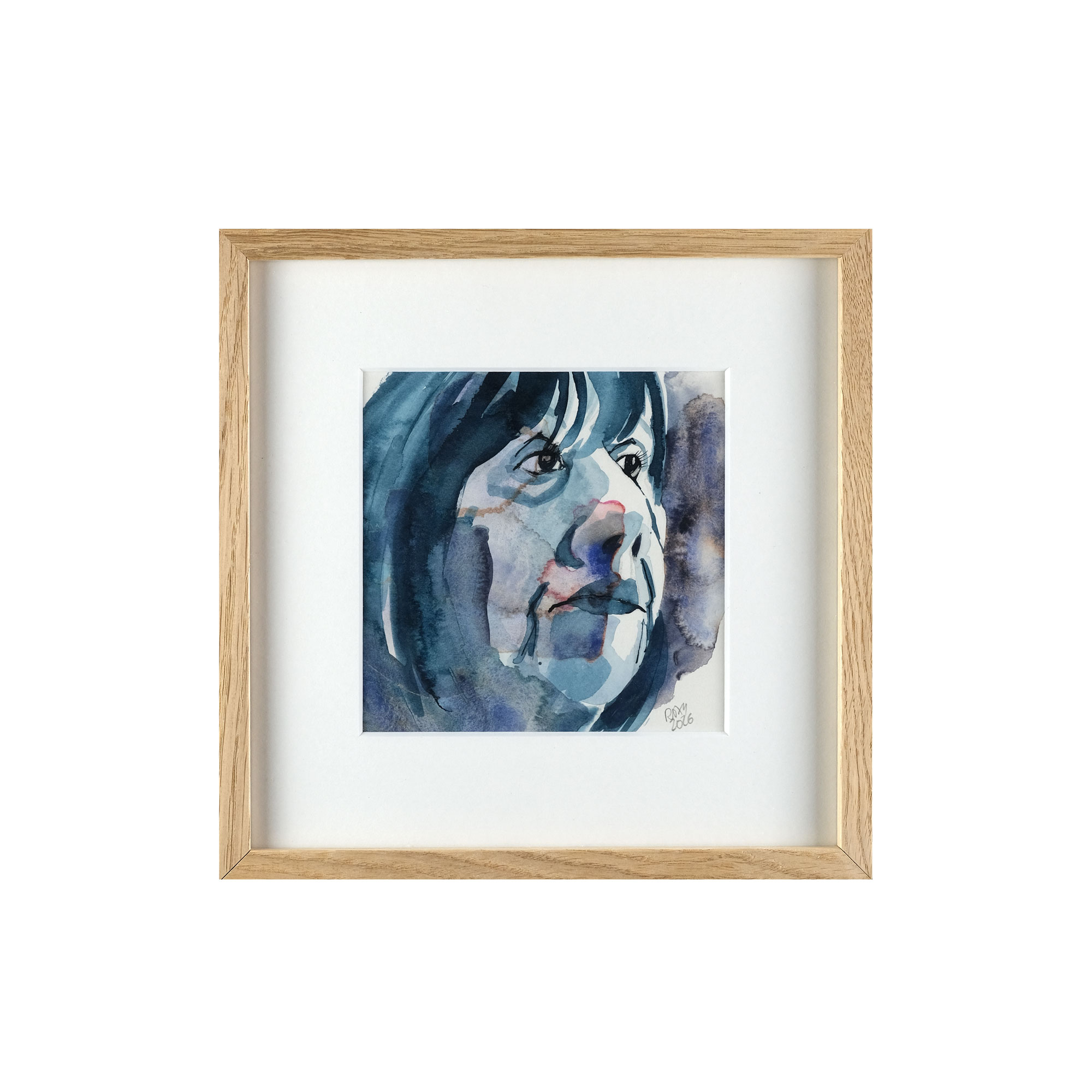
She is the woman who demanded a public trial, in which her husband and 50 other perpetrators were convicted. Gisèle Pelicot declared publicly: shame must change sides. («Que la honte change de camp.») It is not the woman who should feel ashamed, but the perpetrators. Her words stand for a long overdue reorientation in how we deal with sexual abuse, where to this day the blame is often reversed onto the victim ("Well, what was she wearing?"). Perpetrators are perpetrators. Her face has stayed with me. Her calm, open gaze in the face of the appalling acts dealt with in the trial astonishes me again and again. For me – and for many others – Gisèle Pelicot is an icon of freedom and justice. Ink drawing based on a photograph from around the time of the trial.

€250.00*
In 72 Days Around the World (Nellie Bly)
In 1888 American Investigative Journalist Nellie Bly (1864-1922) had an idea: she wanted to travel around the world in less than 80 days – turning the fictional record from Jules Verne's novel "Around the World in Eighty Days" into reality. Her publisher was sceptical. A woman? Impossible. She would need a male escort, would drag along far too much luggage, and in any case spoke only English. Better to send a man. Bly's reply: "Start the man – I'll start the same day for another newspaper and beat him." The publisher gave in. On 14 November 1889 she set off, with a single small travel bag (a mere 40 x 18 cm). Precisely the luggage that a woman, it had been claimed, could never possibly limit herself to. 72 days, 6 hours and 11 minutes later she was back – faster than any man before her. A sensation! This ink drawing shows Nellie Bly with that very travel bag.

€250.00*
Nellie Bly · Pioneering Investigative Journalist
Bold and unwavering in pursuit of the truth. Nellie Bly (1864-1922) feigned a nervous illness in order to go undercover in a psychiatric clinic (then called a "lunatic asylum"). 1889: around the world in 72 days – a sensation!In 1887, Bly fought her way into a job at the New York World, Joseph Pulitzer's leading newspaper. Her first assignment: to infiltrate the notorious Women's Lunatic Asylum on Blackwell's Island. Under the pseudonym "Nellie Brown", she feigned mental illness before several doctors and a judge – and was committed. Her editor's instruction was almost ironic: she should stop smiling, so as not to give herself away. For ten days she endured the brutal conditions. Her report "Ten Days in a Mad-House" made her famous, led to an investigation of the clinic, and secured considerably greater funding for the care of the mentally ill. Bly is regarded as a pioneer of modern investigative journalism.

€250.00*
Shame Changes Sides (Gisèle Pelicot)
She is the woman who demanded a public trial, in which her husband and 50 other perpetrators were convicted. Gisèle Pelicot declared publicly: shame must change sides. («Que la honte change de camp.») It is not the woman who should feel ashamed, but the perpetrators. Her words stand for a long overdue reorientation in how we deal with sexual abuse, where to this day the blame is often reversed onto the victim ("Well, what was she wearing?"). Perpetrators are perpetrators.Her face has stayed with me. Her calm, open gaze in the face of the appalling acts dealt with in the trial astonishes me again and again. For me – and for many others – Gisèle Pelicot is an icon of freedom and justice. Ink drawing based on a photograph from around the time of the trial.

€220.00*